
A Holiday That Turned into an English Test
A Holiday That Turned into an English Test セブが思いがけない英語の試験になったとき
(Introduction)
I just came back from a short trip to Cebu — August 10 to 14 — and what I expected to be a simple recharge ended up feeling like a small exam in my English journey. I'm a developer, and I usually live inside code and documentation; I didn't expect a vacation to highlight the parts of my language learning that needed work. Writing this now, I want to capture not only the sunny moments but the awkward, human parts too.
(導入)
8 月 10 日から 14 日までセブへ短い旅行に行ってきました。単なるリフレッシュのつもりが、思いがけず自分の英語学習の小さな試験みたいになってしまいました。普段はコードやドキュメントに囲まれている開発者の自分としては、休暇が自分の弱点を丸見えにするとは思っていませんでした。今回は、青い海やおいしい食事だけでなく、ちょっと恥ずかしいけれど人間らしい部分も残しておきたいと思います。
A holiday full of sea, pools, and good food
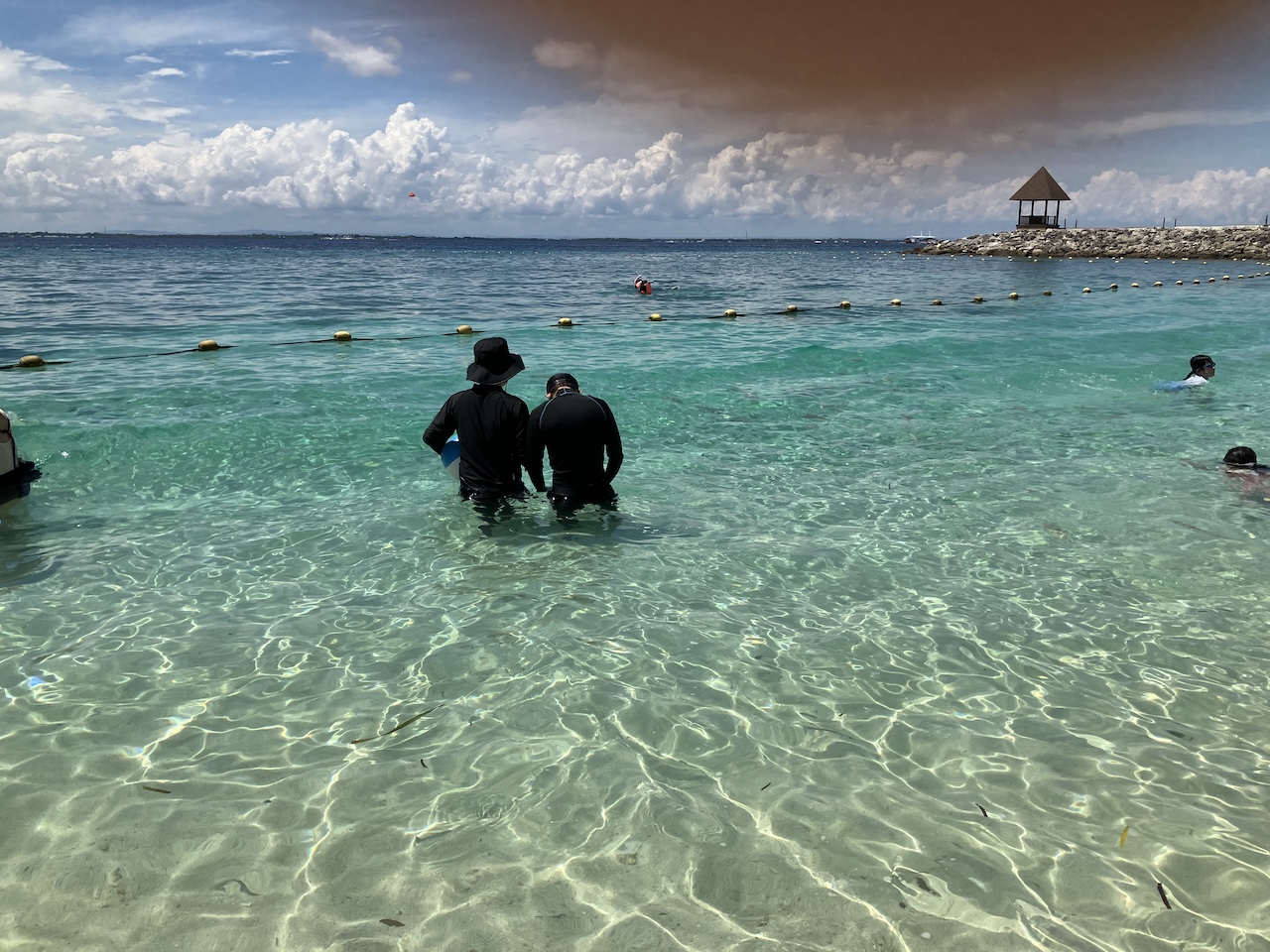
I spent allmost all day by the sea and the hotel poolwith my family and I wandered local streets a little. The hotel was gorgeous, and the meals — especially the local seafood — were fantastic. I remember sitting at a small restaurant, feeling the warm breeze, thinking that this trip was exactly what I needed.
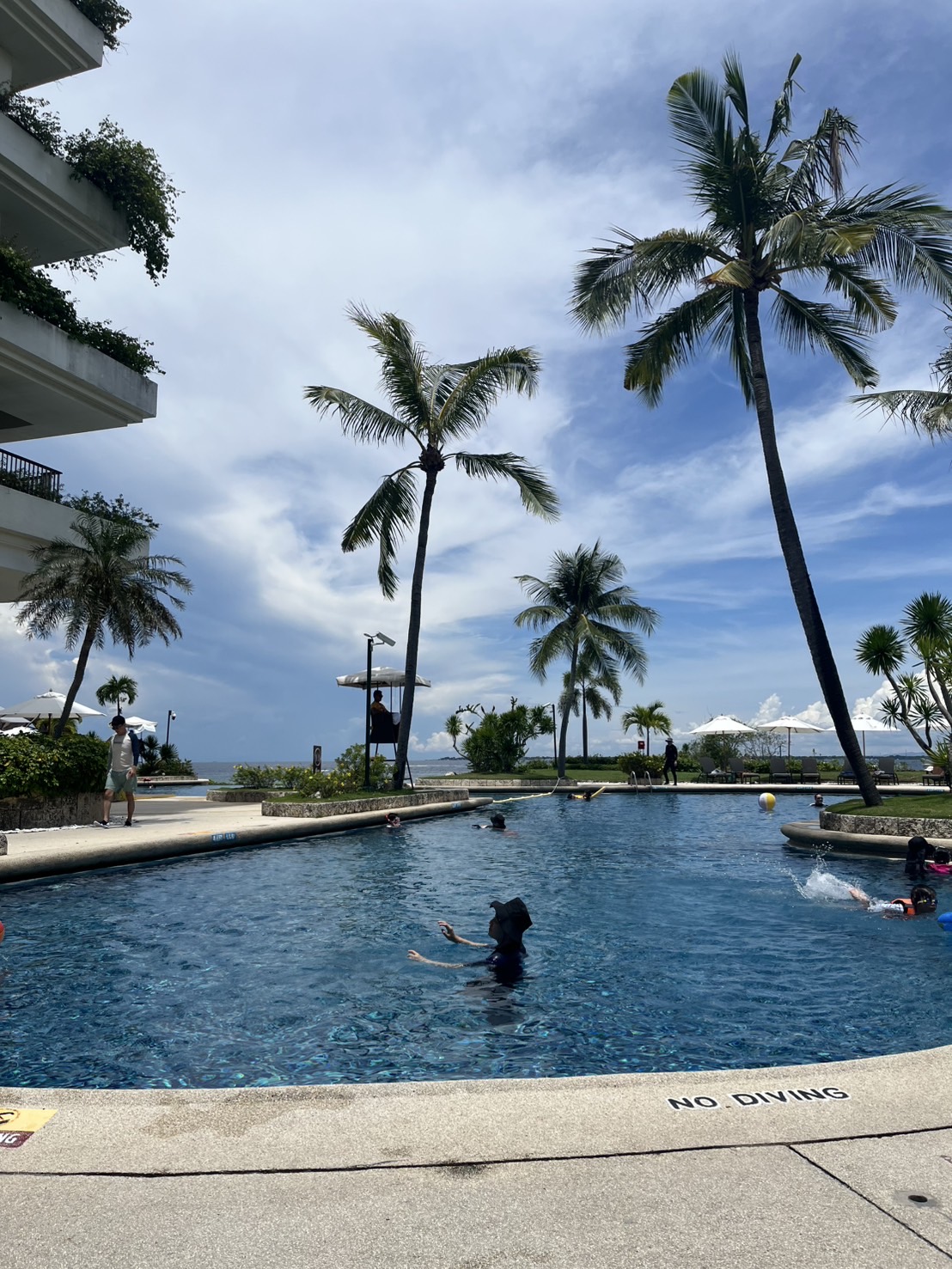
The simple pleasures were very real: swimming, fresh seafood, and a hotel that felt a bit luxurious after months of studying. Those moments felt effortless and joyful, like a reward for keeping at it.
海とプールと美味しい食事に満ちた休暇
ほとんど家族と海かホテルのプールで過ごして、ちょっとだけ地元の街を歩いたりしていました。ホテルはとても豪華で、特に地元のシーフードは本当に美味しかったです。 小さなレストランで暖かい風を感じながら食事を取っていると、この旅行が今の自分に必要なものだと強く思いました。
何気ない楽しさは確かにそこにあって、8 か月間の勉強のご褒美のように感じられました。泳いだり、新鮮な魚を食べたり、ちょっと贅沢なホテルでゆっくりする時間は、何も考えずに幸せでした。
When a vacation became a language test
Even though I enjoyed myself, the trip also felt like a language check. I’ve been studying English for about eight months, super slowly but steadily. For casual chats — ordering food, small talk with hotel staff — I might managed okay. Those interactions gave me a quiet satisfaction: I could connect.
But there were tougher moments. Once I had to check on an order that had somehow already been processed, and explaining the situation clearly was surprisingly hard. My brain stalled when the conversation became more complex. That friction felt oddly exposing; it made me aware of where my learning was shallow.
休暇が言語のテストになったとき
楽しんでいた一方で、旅行は自分にとっての言語チェックのようにもなりました。英語はここ 8 か月ほど、本当に少しずつですが学んできました。カジュアルな会話――食事の注文やホテルのスタッフとのちょっとした会話――は何とかこなせました。そういうやりとりができると、静かな満足感がありました。つながれた感覚です。
しかし、難しい場面もありました。あるとき、処理済みになってしまった注文について確認しなければならず、状況をはっきり説明するのが思いのほか難しかったのです。会話が複雑になると頭が詰まってしまい、その摩擦感が自分の学びの浅さを突きつけました。
The accent and the weakness of output
One of the surprises was the Philippine English accent. I’ve mostly studied American English, so the rhythm and pronunciation here sometimes threw me off. Listening became harder than I expected. On top of that, my practice had been mostly input-focused — a method called Immersion English that I had been following — so my spoken output was relatively weak.
It felt sad to be comfortable understanding podcasts or videos, yet stumble in live conversations. That gap between comprehension and production was humbling; it revealed that input alone wasn't giving me the confidence to navigate unpredictable, real-time exchanges.
アクセントと「話す力」の弱点
驚いたのはフィリピン英語のアクセントでした。私は主にアメリカ英語を学んできたので、ここのリズムや発音にはついていけないことがありました。聞き取りが思っていたより難しかったのです。さらに、私の学習は主にインプット重視――Immersion English という方法を使っていました――だったため、発話の経験が比較的弱いと感じました。
ポッドキャストや動画なら理解できるのに、生の会話になるとつまずくというのは悲しかった。。。理解と発話のギャップはかなり謙虚にさせられるもので、インプットだけでは予測不能なやりとりに対応する自信にならないことを実感しました。
A mentor's calm perspective
After the trip I spoke with my English mentor, Mr. Hiroki, and told him about these moments. He listened and said that the experience itself was very valuable. He admitted that even he finds Filipino accents challenging, so I shouldn't worry too much. He also mentioned that practicing output and building vocabulary would help — which was reassuring to hear, not as instruction but as a reflection from someone who understands my path.
Hearing that from him made the travel mishaps feel less like failures and more like useful signals. They were small, specific reminders of what my learning journey looks like right now.
メンターの穏やかな視点
旅行から戻って、英語メンターの Hiroki さんにそのことを話しました。彼はじっくり聞いてくれて、「その経験自体がとても価値がある」と言ってくれました。Hiroki さん自身もフィリピンのアクセントは慣れてないと難しいと認めてくれたので、あまり気にしなくていいという言葉は心強かったです。さらに、発話の練習や語彙を増やすことが役に立つだろう、という話もありました。指示というよりは経験者の共感として響きました。
彼の言葉で、旅行中のぎこちない出来事は失敗というよりも有益な信号になりました。今の学びの段階が見える、具体的な気づきだったのです。
What this trip means to me now
Looking back, the trip gave me two things at once: rest and clarity. The sea, pool, and food filled me up in the moment; the language stumbles clarified where my next challenges are. I don't feel discouraged — more curious and a little more honest about what I need to practice.
As a developer who likes clear tests and metrics, it was oddly satisfying to have a real-world "test" reveal concrete gaps. The feeling now is quiet optimism: happy I went, aware of what surprised me, and interested in seeing how the next months of learning will feel.
この旅が今の私にもたらしたもの
振り返ると、この旅行は休息と気づきの両方を与えてくれました。海やプール、美味しい食事はその瞬間の満足をくれましたし、言語のつまずきは次に向けたチャレンジの場所を明確にしてくれました。落ち込んでいるわけではなく、むしろ好奇心が湧き、何を練習すべきかに正直になれた気がします。
テストや指標が好きな開発者の自分にとって、実世界の「テスト」が具体的なギャップを示してくれたのは、どこか満足感がありました。今は静かな楽観があり、行ってよかったと思えるし、何に驚いたかを把握でき、これからの学びがどう感じられるか楽しみでもあります。